Travel Letters

Greenland. Icebergs: Big and Blue

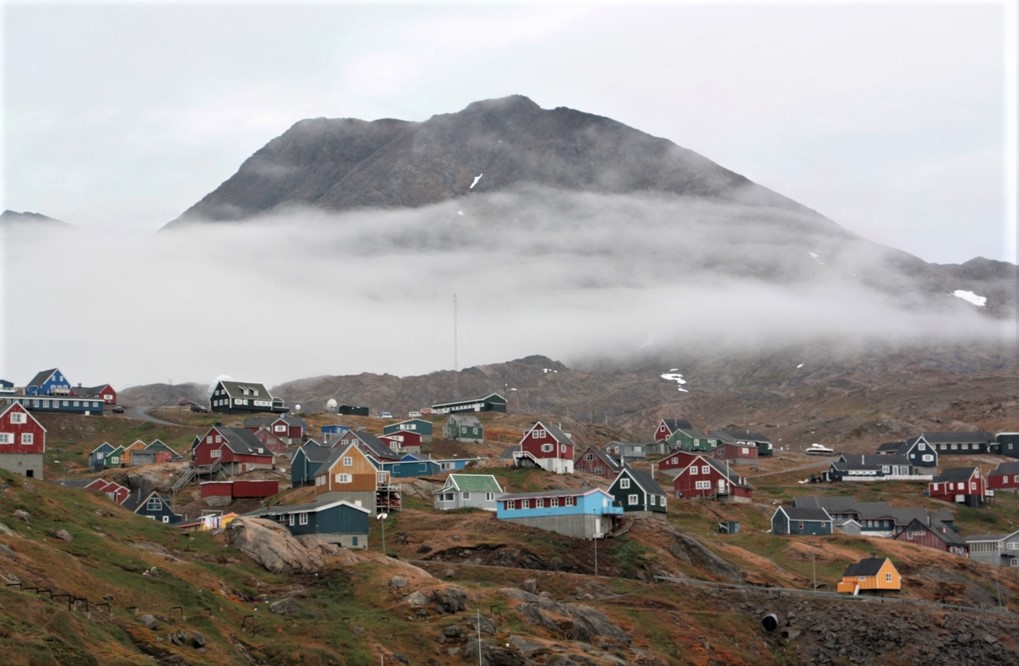
Tasiilaq
Greenland
August 27, 2015

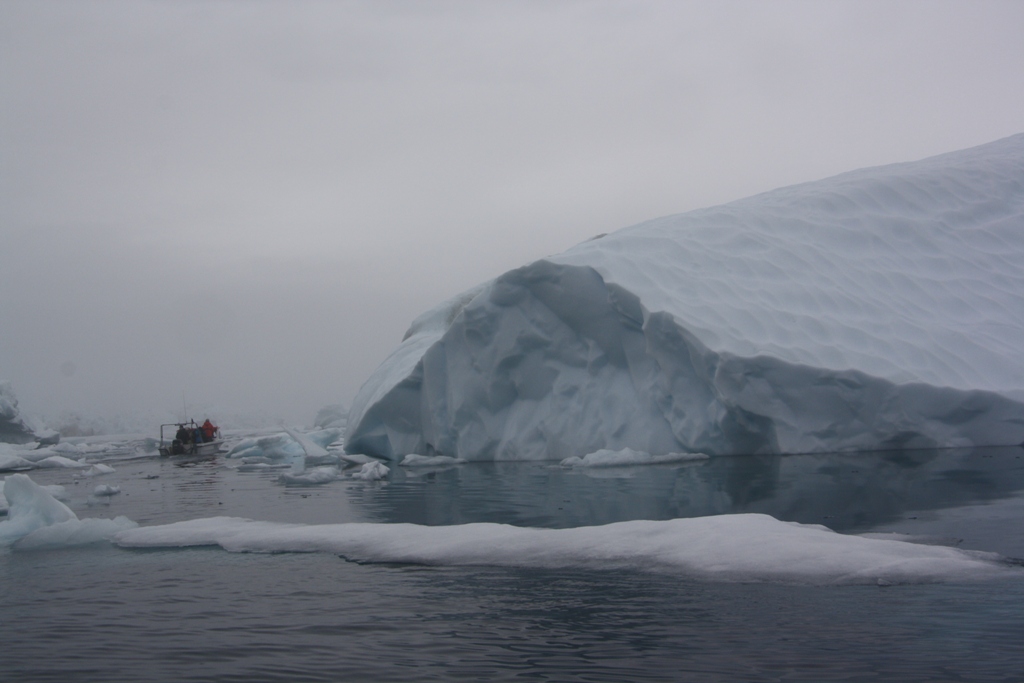
So, you like icebergs?  I mean like really big ones?

The book Icebergs by Christian Kempf shows you and tells you everything you ever wanted to know about big icebergs … and maybe even more.  *

The photographs are outstanding.

The Table of Contents includes: glaciers and ice caps, iceberg routes, classifications, shapes (tabular, arch, pinnacle, bestiary), colors, and explorers.  There’s an entire chapter on The Titanic.

There’s an Iceberg Glossary: everything from Agglomerated Brash, to Bergy Bit, to Firn, to Growler, to Ram and Rill, to Tsunami, to Very Large Iceberg – an actual classification of an iceberg jutting more than 75 meters (246 ft) above the surface of the sea with a length of over 200 meters (656 ft).

The Inuit natives and the main group of inhabitants of Greenland, the Kalaallit, have a rich vocabulary of words to describe the ice, since 79% of the country is covered by it.  The author lists eighteen words, but admits there are about forty words to describe snow and ice.  (Apparently, the “well-known fact” is actually true.)

Greenland. The Story of Glaciers


                 Excerpts from Icebergs.  Christian Kempf. 

                   From Snowflake to Ice Caps to Glaciers*


     Snow gathers in hollows called “cirques,” sometimes up to 20 to 30 meters deep, (65 - 98 ft) assisted by wind, rain and avalanches.

     Fallen snow packs down and becomes less complex in structure as it releases much of the air that was trapped inside between the individual flakes.  This granular snow turns into ice over several years as the crystals bond to each other under high pressure, reaching ever larger sizes, that then bond to each other in turn.

     It generally takes five to ten years for snow to turn to ice.  In Greenland or Antarctica, this process can take a hundred years, while it takes just three to five years on certain glaciers in Svalbard or the Alps, where there is greater snowfall and the climate is cooler – speeding up the process.

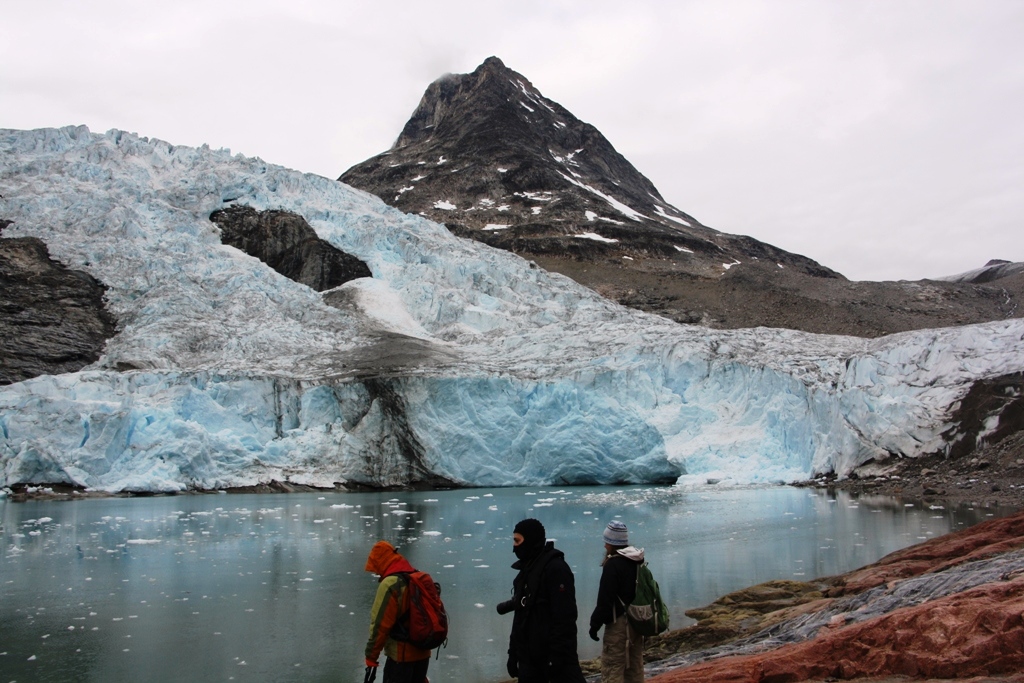
     Glaciers are formed from successive layers of snow, though freezing mist or surface meltwater can also cause the ice to build up.  These accumulations of ice in the center of continents and polar islands are called ice caps (up to 50,000 km2) or ice sheets (over 50,000 km2) (19,305 sq mi).

The ice is up to 600 meters deep in Svalbard and the Campo do Hielo, Chile, (1968 ft).  3100 meters in Greenland (10,170 ft) and up to 4800 meters in Antarctica (15,748 ft or 3 miles deep).

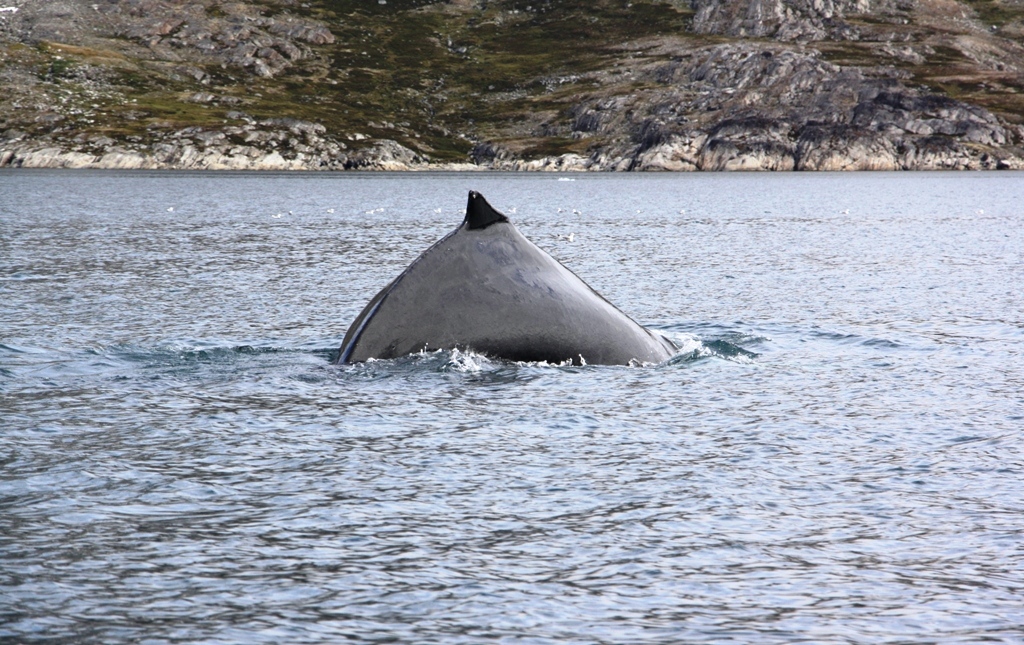
Whale Spotting, Greenland

East Greenland

August 29, 2015

Hello,

The vast landmass of Greenland is more than just snow, ice sheets, glaciers and icebergs.

The small area that I was privileged to visit displayed splendid and inspiring mountain scenery.

We were fortunate to have excellent guides.  But the guides were not only Norwegians or Danes on a summer’s job.  Our guides were also local men. 

The word “guide” is not completely adequate.

I like to think of our guides as “hunters.”

Semiliqaq - Tupilak

Sermiliqaq

East Greenland

August 30, 2015

Hello,

In response to my photographs from Greenland, a friend of mine wrote:

“I loved the pictures.  I did not realize the people there were of Asian descent.”

I have attached a map of the Polar Arctic.  From the location of various modern day countries and islands, we can guess the likely immigration routes by land, by sea and over the ice, routes that originated in Asia.

Ikateq: Debris and Discovery


Ikateq Airbase

Ikateq Fjord

East Greenland

August 28, 2015


If I had had a vote I would have voted “no.”

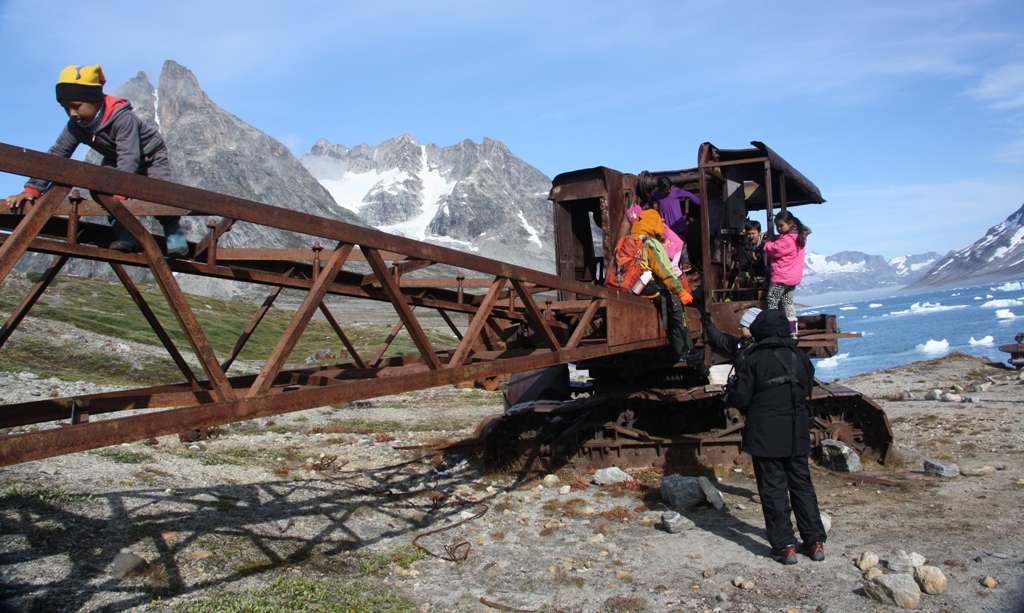
Since I didn’t have a vote, and without any discussion, our tour proceeds up Ikateq Fjord to visit an abandoned United States Airbase built during World War II.

On this occasion, dictatorship trumps democracy.

But why would we want to spend any time at an obsolete gravel airstrip and the adjacent forlorn remains of construction equipment and the rubble of overturned oil drums, discarded and left to rust and decay?

The scenery surrounding the airbase is as dramatic and pristine as any I have seen here in East Greenland.  Yet, is there something moving and compelling and even attractive about this detritus of the not so distant past?

The Story of Icebergs - Greenland


The Iceberg Story

A Poetic Story:

“The Migration of Icebergs” by Daniel Anet*

“It’s a naïve iceberg, pure ethereal sculpture, a floating mountain that rolled over one day and plunged into the sea.  But it’s also the wide open sea, an infinite constellation if icebergs, like a migration of swans; or perhaps it might be the reflection of the Milky Way slipping across the dark blue sea, through the drifting fog.

The fjords thrust into granite lands for hundreds of kilometers, like inland seas; and their waves will eventually lap against short beaches of grey and black pebbles, onto which slump the pleated fronts of age-old glaciers polished by waterfalls. 

Pages